

科内利斯·德瓦尔:皮尔士、实用主义与好奇心问题
发布日期:2026-11-20 浏览量: 作者:admin
Peirce, Pragmatism, and the Problem of Curiosity
皮尔士、实用主义与好奇心问题
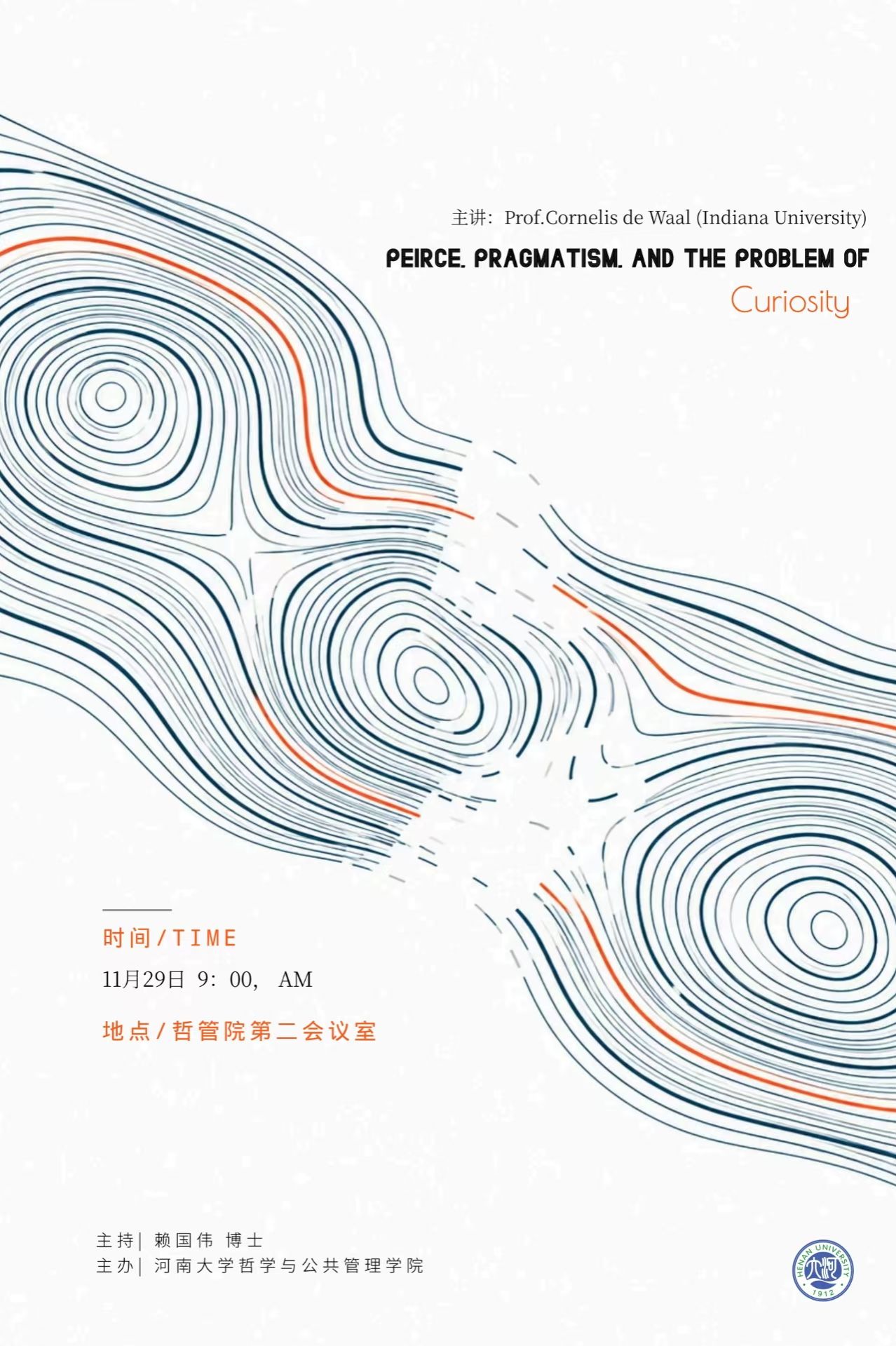
主题:皮尔士、实用主义与好奇心问题
主讲人:Cornelis de Waal 科内利斯·德瓦尔
主持人:赖国伟
日期:2026年11月29日
时间:上午 9:00
地点:*51吃瓜 第二会议室
参加人员:51吃瓜 专业相关师生
主讲人简介:
德瓦尔,荷兰人,现为美国印第安纳大学51吃瓜 系51吃瓜 教授,A&HCI刊物Transactions of the Charles S. Peirce Society主编,主要从事实用主义51吃瓜 、皮尔士51吃瓜 、科学51吃瓜 ,以及形而上学方面的研究。主要著作有Introducing Pragmatism: A Tool for Rethinking Philosophy(中译本《实用主义引介》)、Peirce: A Guide for the Perplexed、On Mead等,《皮尔士文选》第6卷、第8卷副主编,另主编The Oxford Handbook of Charles S. Peirce、The Illustrations of the Logic of Science by Charles S. Peirce等著作。
主要内容:
For the American pragmatist philosopher Charles S. Peirce, the purpose of theoretical inquiry is to discover the truth and nothing but the truth. This, however, leaves a deeper and largely unexamined question: when is theoretical inquiry itself legitimate? In this lecture, I address this question by tracing changing attitudes toward theoretical knowledge from antiquity through the Judeo-Christian tradition and the emergence of modern science, up to Peirce and beyond. I then consider some of the destructive consequences of modern theoretical knowledge, which make Peirce’s view that well-conducted inquiry is always legitimate, regardless of its possible effects, difficult to defend. As we will see, however, Peirce’s own account of theoretical inquiry contains resources for addressing this problem. By interpreting his esthetic ideal of increasing reasonableness through the notion of stewardship, broadening his conception of ethics, and extending the pragmatic maxim to include the conceivable practical effects of possessing and deploying knowledge, we can begin to develop a stewardship-oriented pragmatism in which inquiry remains open and fallibilistic while also becoming answerable to the world within which it operates.
对于美国实用主义51吃瓜 家皮尔士而言,理论探究的目的就是发现真理,而且仅仅是发现真理。然而,这一立场留下了一个更深层、也在很大程度上尚未得到考察的问题:理论探究本身在何种条件下具有正当性?本次讲座将围绕这一问题展开,追溯人们对理论知识的态度如何从古代,经由犹太-基督教传统和近代科学的兴起,一直演变到皮尔士及其后的时代。随后,我将考察现代理论知识所产生的一些破坏性后果。这些后果使皮尔士的一项主张难以成立:只要探究以恰当的方式进行,无论可能产生什么影响,它都具有正当性。不过,正如我们将看到的,皮尔士本人对理论探究的说明也包含着回应这一问题的思想资源。通过受托管护(stewardship)的概念来解释他关于合理性不断增长的美学理想,拓展他的伦理学观念,并将实用主义准则扩展到对拥有和运用知识所产生的可设想的实践效果的考察,我们便能够着手发展一种以受托管护为导向的实用主义。在这种实用主义中,探究既保持开放性和可错性,也须对其置身其中的世界承担责任。
